
Deciding to sell your home in Broomfield, CO means entering a market where the median sale price sits around $658,000, and properties are spending roughly 27 days on the market. With about 284

Dated: August 12 2026
Views: 53
If you're shopping along the Front Range, there's a good chance you've already started comparing Broomfield and Boulder. They're a short drive apart along the US-36 corridor, but the two cities don't really compete on the same terms - the housing markets, price points, and day-to-day costs are genuinely different. Boulder is the high-end option with immediate mountain access; for those considering living in Broomfield, CO, the city sits in the middle of the Denver-Boulder stretch and tends to attract buyers who want proximity to both without paying Boulder prices. Getting clear on which one fits your budget means looking at actual sale prices, property taxes, and what your commute realistically looks like.
The median home sale price in Broomfield is around $657,500 as of mid-2026. Homes are moving quickly - about 16 days on market on average - and sellers are getting 99.7% of their list price. That's a competitive market, but it's a different league than what you're looking at across the corridor.
Boulder's median runs between $915,000 and $935,000, and some sources put average home values closer to $971,000. That's a spread of nearly $300,000 compared to Broomfield's median, which is the single biggest factor shaping where buyers end up focusing their search. Pull your pre-approval before you start scheduling tours - that number will tell you a lot about which city is even on the table.
Boulder's inventory covers a wide range - historic homes near downtown, luxury mountain properties, condominiums, and townhomes - but the supply stays tight. Zoning rules and greenbelt regulations around the city actively limit how far it can grow outward, which keeps available homes relatively scarce.
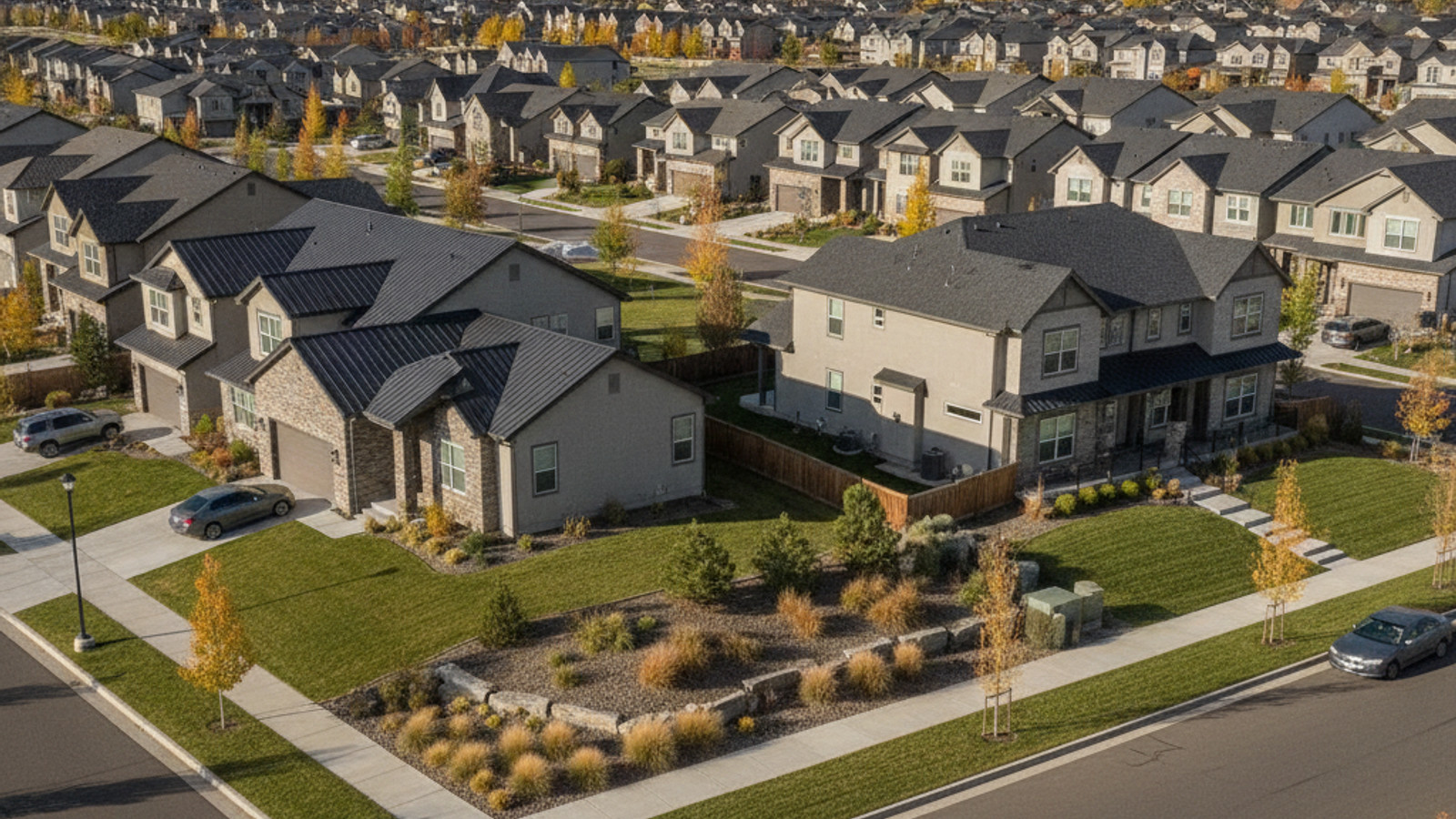
Broomfield developed more recently and it shows in the layout: wider streets, newer subdivisions, and a mix of single-family homes, condominiums, and some properties with acreage. It's a different physical environment than the denser parts of Boulder, and for some buyers that's exactly the point.
The cost of living in Broomfield runs about 19.8% lower than Boulder's, and most of that gap comes down to housing. Groceries are roughly comparable between the two cities; utilities and dining trend slightly cheaper in Broomfield, but those differences are fairly modest next to what you'll see in your mortgage payment.
Property taxes are worth running the actual numbers on before you make any assumptions. Broomfield carries a median effective property tax rate of about 0.68%, with the City and County of Broomfield's mill levy set at 28.969 mills. Boulder County's 2026 property tax rate is 24.046 mills, but the effective rate on any specific property ranges from roughly 0.6% to 1.2% of actual value depending on which local taxing districts apply to that address. Don't guess - look up the specific parcel.
Broomfield sits directly on the US-36 corridor - the Denver-Boulder Turnpike - which makes it genuinely convenient in both directions. Boulder is typically a 20- to 30-minute drive. Denver takes 45 minutes to an hour during rush hour, depending on the day.
If you'd rather not drive, the Regional Transportation District (RTD) Flatiron Flyer runs express bus service along US-36, connecting both cities with regular daily routes. It's a real option, not just a technicality.
Boulder's outdoor access is legitimately hard to match. Chautauqua Park puts you at the base of the Flatirons, and the city maintains extensive open space that draws hikers and climbers from across the state. The trailheads get busy.
Broomfield has its own outdoor spaces - Broomfield County Commons Park, for instance, offers sports fields, walking paths, and open space - without the tourist traffic you'll run into at Boulder's more famous trailheads. It's a quieter version of the same general idea.
Pearl Street Mall is the center of Boulder's commercial life: a pedestrian-only stretch with independent boutiques, restaurants, and street performers. It has a specific character that's hard to replicate.
Broomfield's retail anchor is FlatIron Crossing, a large shopping center just off the highway with major department stores, a movie theater, and dining chains. Convenient and practical - it's a different experience than Pearl Street, but it covers the basics without a commute.
Noticeably cheaper. Broomfield's median home price sits around $657,500, while Boulder's median runs between $915,000 and $935,000. The overall cost of living in Broomfield is about 19.8% lower than Boulder's.
The drive along US-36 takes about 20 to 30 minutes. If you'd rather skip the car, the RTD Flatiron Flyer runs express bus service between the two cities.
It depends on the specific property and which taxing districts apply. Broomfield's median effective rate is about 0.68%. Boulder County rates range from roughly 0.6% to 1.2%, so some Boulder properties will actually come in below Broomfield's effective rate - look up the parcel, don't assume.
Broomfield has solid municipal outdoor spaces, including Broomfield County Commons Park. Boulder has more immediate mountain access, with well-known trailheads at Chautauqua Park. If getting to the Flatirons quickly matters to you, that's a real difference worth weighing.
Deciding to sell your home in Broomfield, CO means entering a market where the median sale price sits around $658,000, and properties are spending roughly 27 days on the market. With about 284
If you're shopping along the Front Range, there's a good chance you've already started comparing Broomfield and Boulder. They're a short drive apart along the US-36 corridor, but the two cities don
The northern Denver suburbs aren't one-size-fits-all, and if you're weighing living in Broomfield against Erie, that becomes obvious pretty quickly. These two communities sit close to each other on
If you're shopping in the northwest Denver metro and keep going back and forth about living in Broomfield, CO versus Arvada, you're not alone. Broomfield and Arvada both put you close to major
 The content relating to real estate for sale in this Web site comes in part from the Internet Data eXchange (IDX) program of METROLIST, INC., DBA RECOLORADO©. Real estate listings held by brokers other than Sellstate Altitude are marked with the IDX Logo. This information is being provided for the consumers' personal, non-commercial use and may not be used for any other purpose. All information subject to change and should be independently verified. September 25, 2026 3:28 PM UTCd
1. This publication is designed to provide information regarding the subject matter covered. It is displayed with the understanding that the publisher and authors are not engaged in rendering real estate, legal, accounting, tax, or other professional services and that the publisher and authors are not offering such advice in this publication. If real estate, legal, or other expert assistance is required, the services of a competent, professional person should be sought.
2. The information contained in this publication is subject to change without notice.
METROLIST, INC., DBA RECOLORADO MAKES NO WARRANTY OF ANY KIND WITH REGARD TO THIS MATERIAL, INCLUDING, BUT NOT LIMITED TO, THE IMPLIED WARRANTIES OF MERCHANTABILITY AND FITNESS FOR A PARTICULAR PURPOSE. METROLIST, INC., DBA RECOLORADO SHALL NOT BE LIABLE FOR ERRORS CONTAINED HEREIN OR FOR ANY DAMAGES IN CONNECTION WITH THE FURNISHING, PERFORMANCE, OR USE OF THIS MATERIAL.
3. PUBLISHER'S NOTICE:
All real estate advertised herein is subject to the Federal Fair Housing Act and the Colorado Fair Housing Act, which Acts make it illegal to make or publish any advertisement that indicates any preference, limitation, or discrimination based on race, color, religion, sex, handicap, familial status, or national origin.
4. METROLIST, INC., DBA RECOLORADO will not knowingly accept any advertising for real estate that is in violation of the law. All persons are hereby informed that all dwellings advertised are available on an equal opportunity basis.
5. 
6. © 2026 METROLIST, INC., DBA RECOLORADO© - All Rights Reserved
6455 S. Yosemite St., Suite 500
Greenwood Village, CO 80111 USA
7. ALL RIGHTS RESERVED WORLDWIDE. No part of this publication may be reproduced, adapted, translated, stored in a retrieval system or transmitted in any form or by any means, electronic, mechanical, photocopying, recording, or otherwise, without the prior written permission of the publisher. The information contained herein including but not limited to all text, photographs, digital images, virtual tours, may be seeded and monitored for protection and tracking.
Options
Show More...
 The real estate listing information and related content displayed on this site is provided exclusively for consumers’ personal, non-commercial use and may not be used for any purpose other than to identify prospective properties consumers may be interested in purchasing. This information and related content is deemed reliable but is not guaranteed accurate by elevateMLS.
 Information should be deemed reliable but not guaranteed, all representations are approximate, and individual verification is recommended. Copyright ©2026 All rights reserved.
